
Can We Talk Dirty?
What happens when recycling comms stop looking like recycling comms.
Typical recycling campaigns tend to look a certain way. Green palette, lots of information, occasional sprinkling of guilt trip.
Working with Lambeth Council and Ecosurety, we wanted to find out what happens when you throw out the rulebook - and whether playful, unexpected communications could cut through better than the usual recycling fare.
Turns out, they can.
The problem
- Over half of people we surveyed in Lambeth didn’t think council recycling comms were engaging or memorable
- 59% were unsure how clean food packaging needs to be
- Almost a third of contamination in Lambeth’s recycling is food waste
- WRAP's data shows that 18-34 year olds and renters are less confident and engaged in recycling
This led us to creatively tackle food contamination among 18-34 year olds in Brixton – typically renting, less engaged with recycling, and in an area with above-average contamination rates.
What we did
Can We Talk Dirty? was built on a simple insight: our target audience responds to entertainment, irony and self-awareness.
So, we made something that didn't look like a recycling campaign at all.
Bold pink visuals, a deliberately provocative name and a saucy campaign film. Designed to surprise, hook people in and pass on a simple message – leftover food spoils recycling for everyone, keep it clean to make it count.
We reached people where they already spent time; ads on socials, trailers at the local cinema, town centre billboards and flyers through residents' doors.
And we used content our audience wanted to engage with – short, snappy videos plus longer-form street interviews featuring Wilf from The Traitors.
Out of all the video content, Wilf's video had the highest impressions and reach - proof that the Trojan horse approach can work. Get the format right, and people will engage with content they'd usually scroll past.

What happened
- With a marketing spend of £9,000, the campaign generated almost 1.2 million impressions, that’s enough to reach everyone in Brixton 14 times over!
- Over 9 in 10 18–34-year-olds liked the campaign style
- 20% increase in the number of people who reported rinsing and emptying packaging before recycling
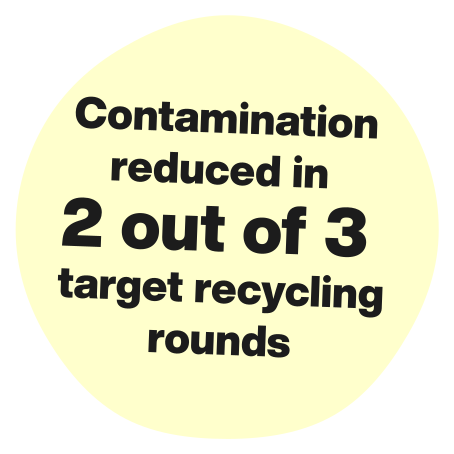
- Contamination reduced in two out of three target recycling rounds
What we learned
-
Be targeted
One size often doesn’t fit all. Narrow down your audience and adapt the campaign creative, messages and channels to suit.
-
Keep it snappy
People don’t need all the information at once. Focus on one key message, prioritise short-form content, and signpost where to find more information.
-
Use human-centred content
Our more relatable content featuring real people or photography out-performed graphic-led content.
-
Break the mould
People engaged because it didn't look like a recycling campaign. If your comms look like they always have, the chances are people will ignore them.
Partner with us
If you’d like to take a fresh, creative approach to increase recycling and reduce waste, get in touch with our team.
Thinking of changing-up something in your own life?
Read our 10 ways to create change.
See Hubbub in action
From Community Fridges that cut food waste to Ballot Bins that halve cigarette litter, our campaigns show what taking action that's good for the environment looks like in practice.